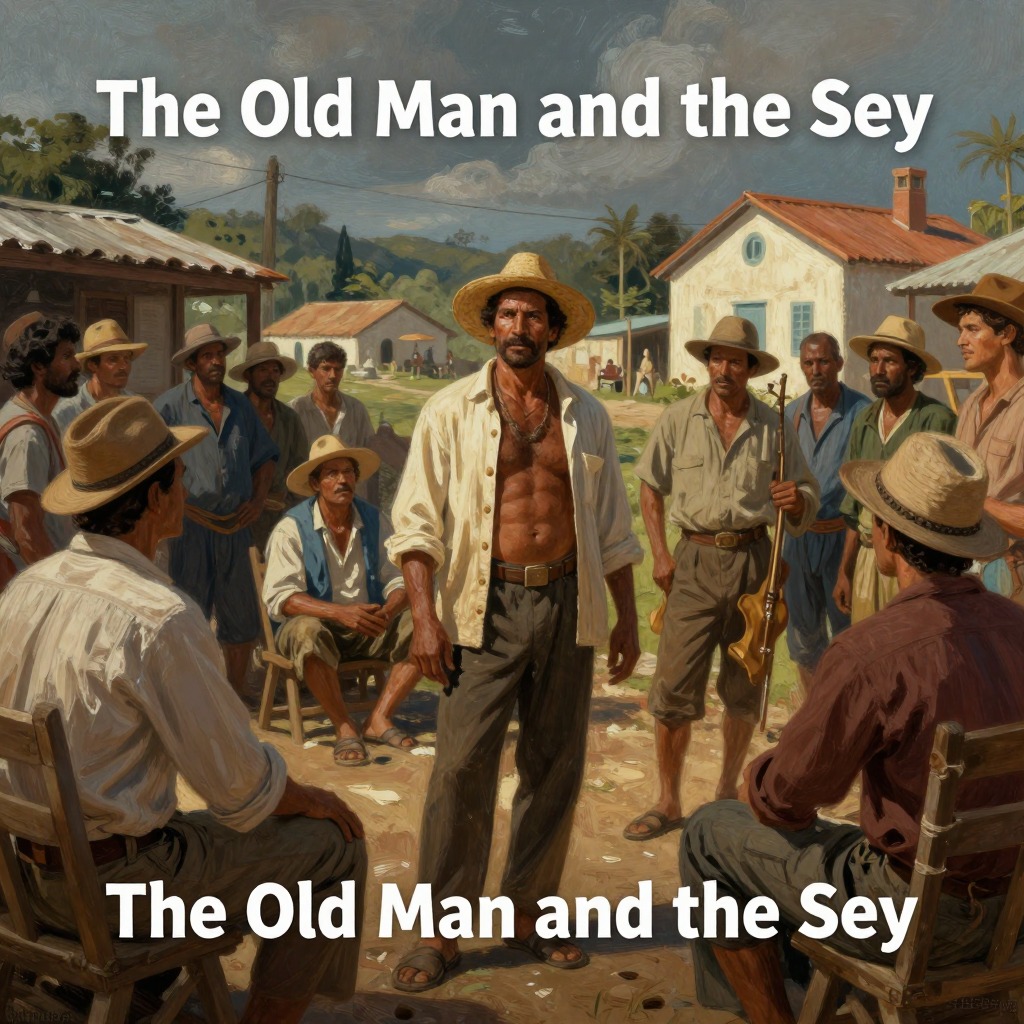
Martin
Martin is the proprietor of the Terrace, the restaurant and bar that serves as the social heart of the fishing village where Santiago lives. He is not a fisherman himself but occupies a central role in the community, providing food, drink, and a gathering place for the men who work the sea. His generosity toward Santiago, offered without fanfare or demand for repayment, marks him as a figure of quiet, dependable kindness in a world defined by hardship and luck.
Identity and Role
Martin owns the Terrace, the establishment where the fishermen sit, drink, and talk after their days on the water. It is on the Terrace that Santiago and Manolin share a beer at the beginning of the story, and where the successful fishermen bring their catch to be butchered and sent to market in Havana. Martin is not merely a businessman; he is woven into the daily life of the village, and his actions reveal a personal investment in the well-being of his customers, especially the old man.
Acts of Generosity
Martin's most significant actions in the narrative are acts of unsolicited generosity toward Santiago. When the boy Manolin brings supper to the old man's shack, the meal—black beans and rice, fried bananas, and stew—has been provided by Martin. The boy explains, "Martin. The owner," when Santiago asks who gave the food. Martin has also sent two bottles of Hatuey beer, a gesture Santiago appreciates even though he prefers beer in cans. The old man recognizes that this is not a single occurrence; he asks the boy, "Has he done this for us more than once?" and Manolin confirms, "I think so." Santiago then resolves to give Martin something more than the belly meat of a big fish, acknowledging that "He is very thoughtful for us." This pattern of giving, repeated and unasked for, establishes Martin as a reliable source of support for Santiago during his long run of bad luck.
Relationship with Santiago and the Community
Martin's relationship with Santiago is one of mutual respect, though it is expressed through action rather than extended conversation. The old man does not take Martin's help for granted; he feels the weight of obligation and plans to repay him with the best part of a future catch. After Santiago returns from his epic battle with the marlin, having lost nearly all the meat to sharks, Martin is among those who acknowledge the scale of what the old man accomplished. He tells the boy, "What a fish it was. There has never been such a fish. Those were two fine fish you took yesterday too." This remark, made while Manolin is in tears, shows that Martin understands the magnitude of Santiago's achievement even though the physical prize has been reduced to a skeleton. The boy, however, is too grief-stricken to accept the compliment, saying, "Damn my fish," and begins to cry again. Martin then asks if the boy wants a drink and tells him to convey his sympathy to Santiago: "Tell him how sorry I am." This final gesture of concern, offered after the old man's ordeal, confirms Martin's role as a steady, compassionate presence in the community—a man who gives freely, recognizes true greatness, and shares in the sorrow of a friend's defeat.